
Just about every Aspen local, as well as seasoned visitors, have a favorite trail. With an abundance of hiking and mountain biking trails in the Roaring Fork Valley, there are some ideal routes for long, picture-perfect runs with some serious ascents and descents.
Aspen is one of Colorado's premier trail-running destinations, offering everything from gentle valley routes to challenging alpine climbs. Whether you're training for a mountain race or simply looking for a scenic morning run, Aspen's extensive trail network provides options for every experience level.
Before heading out, remember that Aspen sits at nearly 8,000 feet above sea level. If you're coming from a lower elevation area, you should allow time to acclimate, carry plenty of water, and be prepared for rapidly changing mountain weather.
Here are five of the best trail runs in and around Aspen.
1. Hunter Creek Valley
Distance: 4–12+ miles (customizable)
Difficulty: Moderate
Best Season: Late spring through fall
With two main access points from the town of Aspen, Hunter Creek Valley offers an extensive trail system with routes for all skill levels. Runners can make their way up the Hunter Creek Trail to the west of the valley or trek up Smuggler Mountain Road (a dirt fire road). Once in the valley, runners can opt for a variety of routes throughout the area.
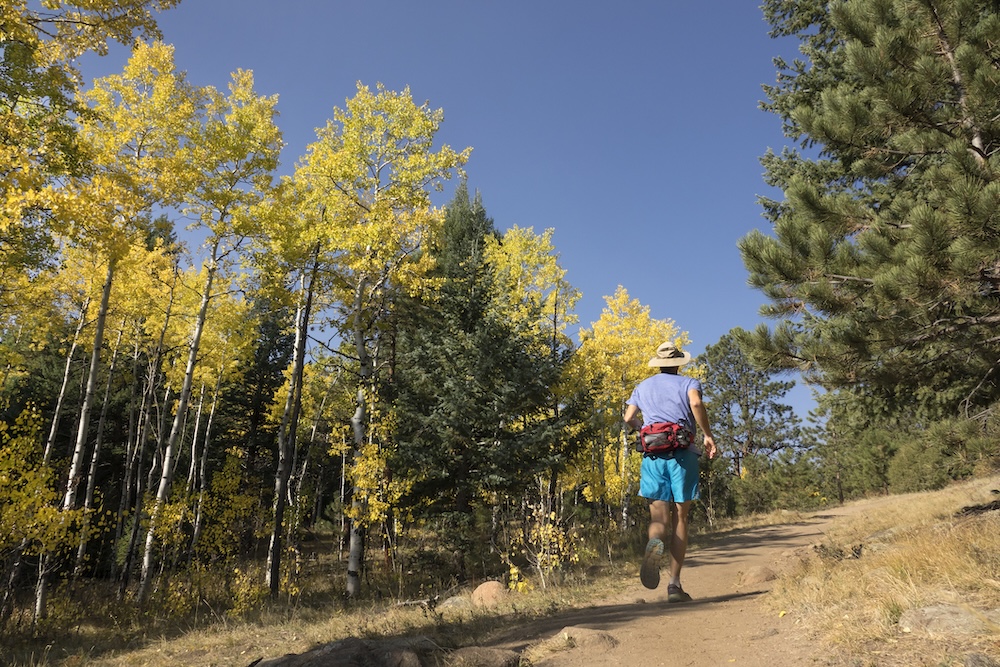
The valley separates two parallel ridges covered in aspen groves. The open meadow offers great views of the surrounding Elk Mountains, and trails meander near a few historic mining cabins. Accessing the Hunter Creek Valley during the fall is commonly rewarded with time spent among the golden-colored aspen groves.
Highlights:
- Easy access from downtown Aspen
- Historic mining cabins
- Beautiful fall colors
- Flexible mileage options
- Scenic mountain views
2. Sunnyside
Distance: 6.3 miles one way
Difficulty: Difficult
Elevation Gain: More than 2,000 feet
Beginning at Cemetery Lane, this trail climbs more than 2,000 feet. From the highest point, runners are rewarded with views of all four ski mountains and the Maroon Bells. After the 6.3-mile one-way trail, runners have the option to traverse Red Mountain and connect with a number of trails in the Hunter Creek Valley. There is also the option to run along the Rio Grande Trail back to your starting location.
Highlights:
- Significant elevation gain
- Exceptional valley views
- Excellent training route
- Connections to additional trail networks
3. Government Trail
Distance: Approximately 6.6 miles
Difficulty: Moderate
The popular mountain biking trail beginning in Snowmass and ending in Buttermilk, is often enjoyed by trail runners who take it in the opposite direction (Buttermilk to Snowmass). The reverse route gradually ascends and then transitions to quick up and down terrain.
With 6.6 miles of singletrack trail, Government offers runners the chance to run through wildflower fields and shaded aspen groves. If you are too tired to turn around and make it back to the base of Buttermilk Mountain, you can always hop on the bus from Snowmass Base Village back to your starting point.
Highlights:
- Smooth, runnable singletrack
- Wildflowers in summer
- Beautiful aspen forests
- Convenient transportation options
4. Crater Lake/East Snowmass Creek Trail
Distance: Approximately 10 miles round trip
Difficulty: Moderate
For a 10-mile out and back run, East Snowmass Creek Trail is a good option. The gently sloping eastern edges of the Maroon Creek valley offer good views of Pyramid Peak. Running this route in the summer offers breathtaking wildflowers, and the fall gives runners great lookout points of the golden aspen trees.
Runners can continue along the path to East Maroon Pass, then on to Copper Basin, and eventually to Crested Butte. The run / hike from the Maroon Bells to Crested Butte is popular during the summer months among overnight campers.
Highlights:
- Alpine scenery
- Wildflowers and fall colors
- Moderate grade
- Wilderness setting
5. Conundrum Creek Trail
Distance: Approximately 18 miles round trip
Difficulty: Difficult
With the reward of natural hot springs, the Conundrum Creek Trail is well worth the 2,500 vertical feet climb over 9 miles. During summer months, runners can expect meadows of wildflowers and shaded groves of aspen trees. However, the trail is gorgeous in the fall season, as it is filled with the golden turned-aspen trees.
The view from the furthest point, Conundrum Hot Springs, offers amazing views of the valley runners have just completed.
Highlights:
- Natural hot springs
- Spectacular mountain scenery
- Challenging elevation gain
- Bucket-list Colorado trail run
Trail Running Tips for Aspen Visitors
Acclimate to the Altitude
Aspen's elevation can significantly impact performance and endurance. Consider spending a day or two adjusting before attempting longer runs.
Carry More Water Than You Think You'll Need
Mountain air is dry, and dehydration can occur quickly at altitude.
Start Early
Morning temperatures are cooler, and afternoon thunderstorms are common during summer months.
Respect Wildlife
It's common to encounter deer, elk, foxes, and other wildlife on local trails. Observe animals from a safe distance and follow Leave No Trace principles.
Check Trail Conditions
Weather, snowpack, and seasonal closures can affect trail accessibility throughout the year.
Join us in Aspen!

With scenic mountain views, diverse terrain, and easy access to miles of trails, Aspen remains one of Colorado's top destinations for trail runners. Whether you're looking for a short morning outing or an all-day mountain adventure, these trails offer unforgettable experiences in every season.
Ready to explore Aspen's trail network? Browse our available Aspen Snowmass rentals now to find the perfect Aspen vacation rental close to your favorite trails.
Frequently Asked Questions
What is the best beginner-friendly trail run in Aspen?
Hunter Creek Valley is often the best choice for beginners because it offers manageable grades, flexible distances, and easy access from downtown Aspen.
When is the best time for trail running in Aspen?
Late June through October typically offers the best trail-running conditions. September is especially popular due to cooler temperatures and vibrant fall colors.
How does Aspen's altitude affect runners?
Aspen sits at nearly 8,000 feet above sea level, which can make physical activity feel more demanding. Visitors may notice reduced endurance until they acclimate.
Are dogs allowed on Aspen trails?
Many trails allow dogs, but regulations vary by location. Always check local trail rules and leash requirements before heading out.
What should I bring for longer runs?
Water, snacks, layers, sun protection, a charged phone, and basic safety supplies are recommended for longer mountain runs.